John Keller Is Hired to Investigate the Wieder Case and Missing Manuscript
The Book of MirrorsJohn Keller Is Hired to Investigate the Wieder Case and Missing Manuscript marks the point when a search for a lost book becomes an inquiry into Joseph Wieder’s murder. Literary agent Peter Katz hires Keller, a former reporter now living on freelance work, to locate Richard Flynn’s missing manuscript or reconstruct the story it was meant to tell. The commission supplies a fragment and a plan, but not a reliable account of what happened: each archive and witness can offer only part of the past.
The Commission
Keller’s circumstances made Peter’s proposal consequential. After reporting jobs and a short-lived attempt to make a living through a blog, a news site, and freelance assignments, he was struggling financially and looking back at journalism as a better time. Peter, his cultivated and rather reclusive friend from their student days, was now a literary agent at Bronson & Matters. He told Keller about Flynn’s manuscript over lunch, explaining that Flynn had died the previous month and that his partner, Danna Olsen, said she had found no trace of the book.
Peter saw both a commercial opportunity and a reporting problem. The subject had market potential, he said, but a fragment of a million-dollar manuscript was worthless on its own. Flynn’s will had left Olsen his property and belongings apart from a few items for his brother, Eddie, so Peter believed that an agreement with her could authorize publication. Keller, however, had no obvious way to find the missing pages and questioned whether an investigation into a murder more than twenty years old could produce a usable book.
Peter’s proposed alternative was to rebuild the story from its known elements. Flynn’s excerpt identified people, a setting, and a time frame; if the rest of the manuscript could not be found, Keller could reconstruct the puzzle, with the fragment incorporated into a new book by Keller or a ghostwriter. Peter argued that readers would be drawn to Wieder’s murder, not necessarily to Flynn as an unknown author. His repeated insistence that Keller understood the plan sharpened the difference between the agent’s market-driven confidence and the reporter’s uncertainty about what the evidence could actually establish.
Accepting the Assignment
Peter’s case for investigating Flynn rested on details he had gathered online: Flynn had known and worked for Wieder, possessed keys to Wieder’s house, and had once been treated as a suspect. Peter did not take those facts as a solution; he presented them as reasons to investigate. Keller let him wait while they finished lunch, then accepted. He signed a contract containing a nondisclosure clause, and Peter handed over a copy of the opening portion of Flynn’s manuscript together with notes intended to start the inquiry.
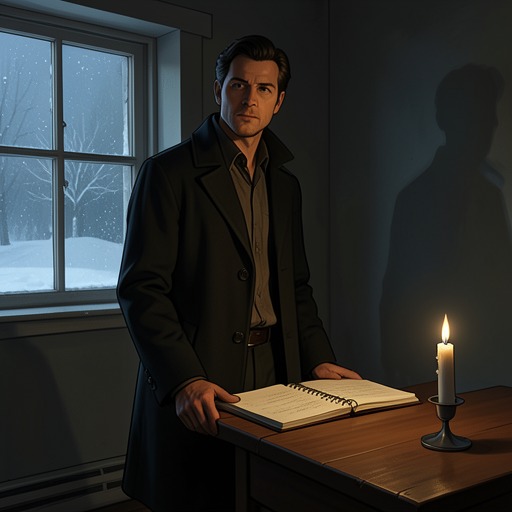
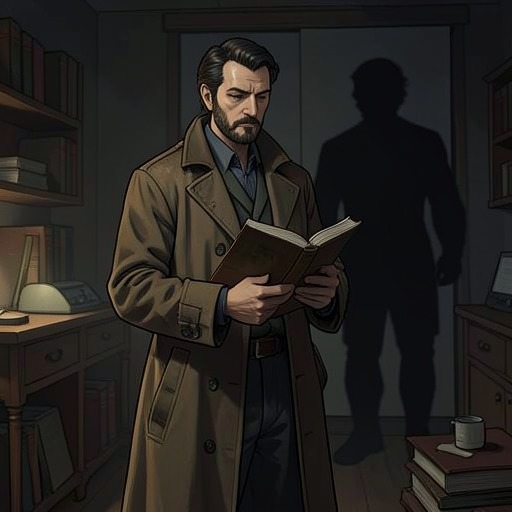
Keller carried the papers home in the reporter’s bag he had kept since his newspaper days and spent the evening reading the manuscript. The contract made the assignment formal, while the fragment made its limits immediate: Keller had to investigate a story whose central document was incomplete and whose author was dead. When he later asked Olsen whether she knew where the rest of the manuscript was, she confirmed that she did not. She had taken Flynn’s calls during his first day in hospital, then stopped; although his brother and colleagues knew of his condition and had her number, she lacked access to Flynn’s email. She offered to search the small Lenovo laptop he had left behind, but made clear that she would need to speak with Flynn before handing over any manuscript she might find.
A Three-Part Investigation
At his apartment in Hell’s Kitchen, Keller reread the fragment and marked it by subject: blue for Flynn, green for Wieder, yellow for Laura Baines. He marked Derek Simmons in blue pen because Flynn’s text said Simmons had played an important part in the affair. Keller also made a separate list of the other names, treating the people named in the manuscript as possible sources. His experience as a reporter had taught him that people were often willing to revisit their past, even when their recollections beautified it.
He divided the work into three routes. First, he would search the Internet for material about the murder and those involved. Second, he would find the people mentioned in the fragment, especially Laura, and try to learn what they knew. Peter’s notes supplied a troubling lead: shortly before Flynn died, he had argued on the phone with a woman named Laura, whom he blamed for destroying his life and threatened to make pay. Keller could not yet tell whether this was the same Laura as the one in Flynn’s manuscript, so the apparent connection became a question to test rather than a conclusion.
The third route led to police archives in West Windsor Township, in Mercer County. Keller hoped to consult the statements, reports, and interrogation notes gathered by detectives investigating Wieder’s high-profile murder. He expected the inquiry to have been conducted thoroughly even though it had produced no resolution. As a freelance reporter, he lacked institutional leverage; if he reached a dead end, he planned to ask Sam to use the influence of NY1 television station on his behalf. The three routes—public information, living witnesses, and official files—reflected different kinds of evidence, none sufficient on its own.
Records, Gaps, and New Leads
Keller’s search of publishing records widened the investigation beyond Flynn’s lost book. The next morning he called Allman & Limpkin and was directed from the psychology acquisitions editor to the archive department. The archivist refused to speak to the press without management’s permission, but Keller persuaded the editor to pursue his questions: whether Wieder had submitted a proposal, whether he had delivered a complete manuscript, and why the book had never appeared.
The editor later found that Wieder had sent a proposal with the book’s first chapter in July 1987 and stated that the manuscript was complete and ready for submission. The publisher sent a contract in August. Wieder was meant to begin revisions with his editor in November, but asked for several more weeks to polish the manuscript over the holidays. The request was granted; the full manuscript never reached the publisher. A nearly fifty-page scan of the typewritten proposal gave Keller a substantial new document, but it did not supply the missing book or explain its disappearance.
The accumulation of records left Keller less certain, not more. He pictured himself lost in a maze, surrounded by details that refused to cohere; as the inquiry advanced, Flynn, initially its central figure, receded while Wieder’s public stature took over the story. Keller also could not make the Laura Baines of Flynn’s manuscript fit the woman he had met at Columbia University Medical Center. The mismatch between the written character and the living person kept the manuscript from functioning as a transparent account of events.
A later, almost accidental review of Derek Simmons’s call records opened another line of inquiry. Keller had copied a list of twenty-eight calls made or received around Simmons’s wife’s murder, with numbers, subscriber details, dates, and durations. One address looked familiar, although the name attached to it, Jesse E. Banks, meant nothing to him. The call had lasted fifteen minutes and forty-one seconds. Keller recognized the address and realized that the number, irrelevant to investigators in 1983, mattered to his inquiry into Wieder’s death in December 1987. The commission had begun as a search for one missing manuscript; it was now drawing connections across cases and across records created for different purposes.